
Buddhism in Chiang Mai : Temples, Monks and the Rituals That Shape Daily Life
Reading time : 9 min | Updated : April 2026
Chiang Mai has over 300 Buddhist temples. That number is cited so often that it stops meaning anything. What it actually means is this : you cannot walk for ten minutes in the old city without encountering a place where people go every day to kneel, to offer, to sit quietly, and to remember what they believe. Buddhism in Chiang Mai is not a museum. It is the operating system of daily life.
Understanding even a small part of that changes how you experience the city. The monks you see at dawn are not performing for visitors. The incense burning at the shrine outside the hardware store is not decoration. The bells that ring at the temple down the street from your guesthouse mark a ritual that has been repeating, in roughly the same form, for seven centuries.
This is what you are inside when you walk the streets of Chiang Mai. Here is how to read it.
The Lanna Difference
Buddhism arrived in northern Thailand from Sri Lanka via Burma, following a different path than it took to reach Bangkok. The Lanna Kingdom adopted Theravada Buddhism as its official religion, which shaped the philosophical and spiritual foundation of the temples, their intricate decorations, and the rituals still practised today. GVI
The result is a Buddhist culture that is recognisably Thai but distinctly northern. The temples look different : the Lanna style is characterised by its intricate wood carvings and tiered, sloping roofs GVI, lower and wider than the tall pointed spires of central Thai temples. The ceremonies follow a different ritual calendar. The relationship between monks, temples, and the surrounding community has its own northern character, more intimate and less formal than what you find in Bangkok.
Chiang Mai has no shortage of incredible dazzling Buddhist temples. There is a temple around almost each and every corner around the city within the Old City and out into the countryside. Miss Filatelista Each of those temples is an active religious institution. Monks live in them, study in them, and conduct ceremonies in them daily. The architecture is inseparable from the practice.
The Alms Walk at Dawn
Set your alarm before sunrise. Walk to the streets near Wat Phra Singh or Wat Chedi Luang while it is still dark, find a spot on the pavement, and wait.
The tak bat, the morning alms-giving procession, happens every day without exception. Monks in saffron robes walk single file through the residential streets of the old city, moving slowly and silently, their lacquered bowls held out as residents kneel to place rice and food inside. The exchange takes less than three minutes. It has been happening, in this form, since the temple was established.
This is the most direct available encounter with Buddhism as a living practice rather than a historical exhibit. The residents who prepare offerings the night before and wake before dawn to give them are not doing it for visitors. They are doing it because it is how merit is made, because it is what their parents did, because it is Tuesday morning and this is what Tuesday morning looks like.
Observing respectfully from a distance is enough. For a guided introduction that provides cultural context before you witness the procession, the sunrise alms walk experience offers a briefing on the meaning of tak bat and the etiquette of observation, which makes the experience considerably more meaningful than arriving uninformed.
The Four Temples You Need to Understand
Chiang Mai's 300 temples are not all equally significant. Four of them carry enough history, architectural weight, and living religious importance to serve as a foundation for understanding everything else.
Wat Chiang Man is the oldest temple in the city, built in 1296 by King Mangrai when he founded Chiang Mai. From Wat Chiang Man, Mengrai oversaw the construction of his new capital city. Chiangmai Alacarte The temple houses two sacred Buddha images of great antiquity, and its small scale and relative quiet make it one of the more honest encounters with Lanna Buddhist architecture in the old city.
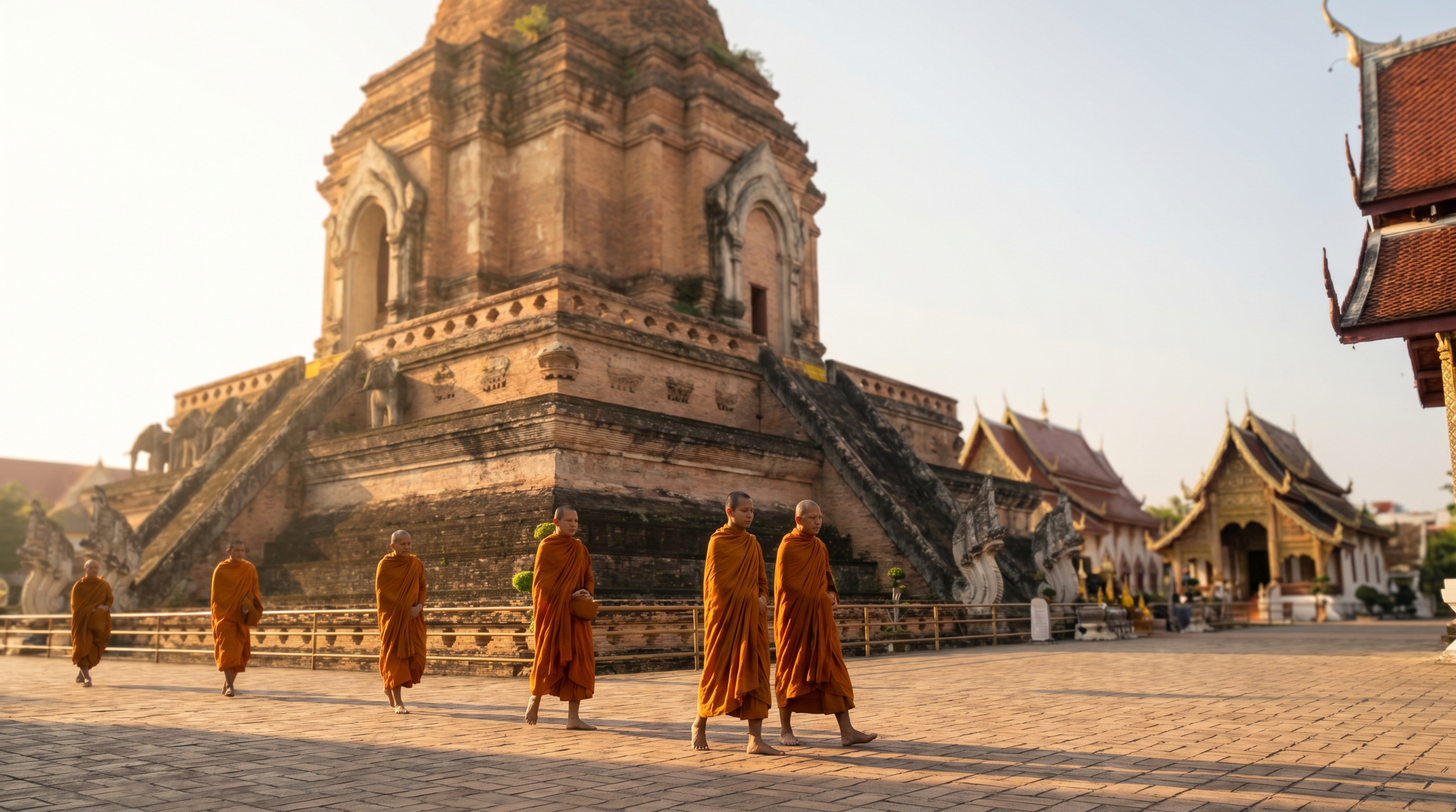
Wat Chedi Luang anchors the centre of the old city with a partially ruined chedi that was once the tallest structure in Chiang Mai. Built in the 14th century, it was once the tallest structure in the city and housed the Emerald Buddha, Thailand's most revered Buddhist image. Aleenta Resorts The ruin, rather than diminishing the temple, gives it a particular authority : this is what 700 years looks like. Wat Chedi Luang also runs one of the best monk chat programmes in the city, where resident monks engage with visitors on questions about Buddhist philosophy and monastic life every afternoon.
Wat Phra Singh is the most important active temple in the old city, dating to the 14th century. The temple was originally built by a Lanna king as a mausoleum for his father's ashes. Catmotors The main assembly hall contains murals depicting the life of the Buddha and scenes from Lanna history that art historians consider among the finest examples of traditional northern Thai painting. Come for the architecture, stay for the murals.
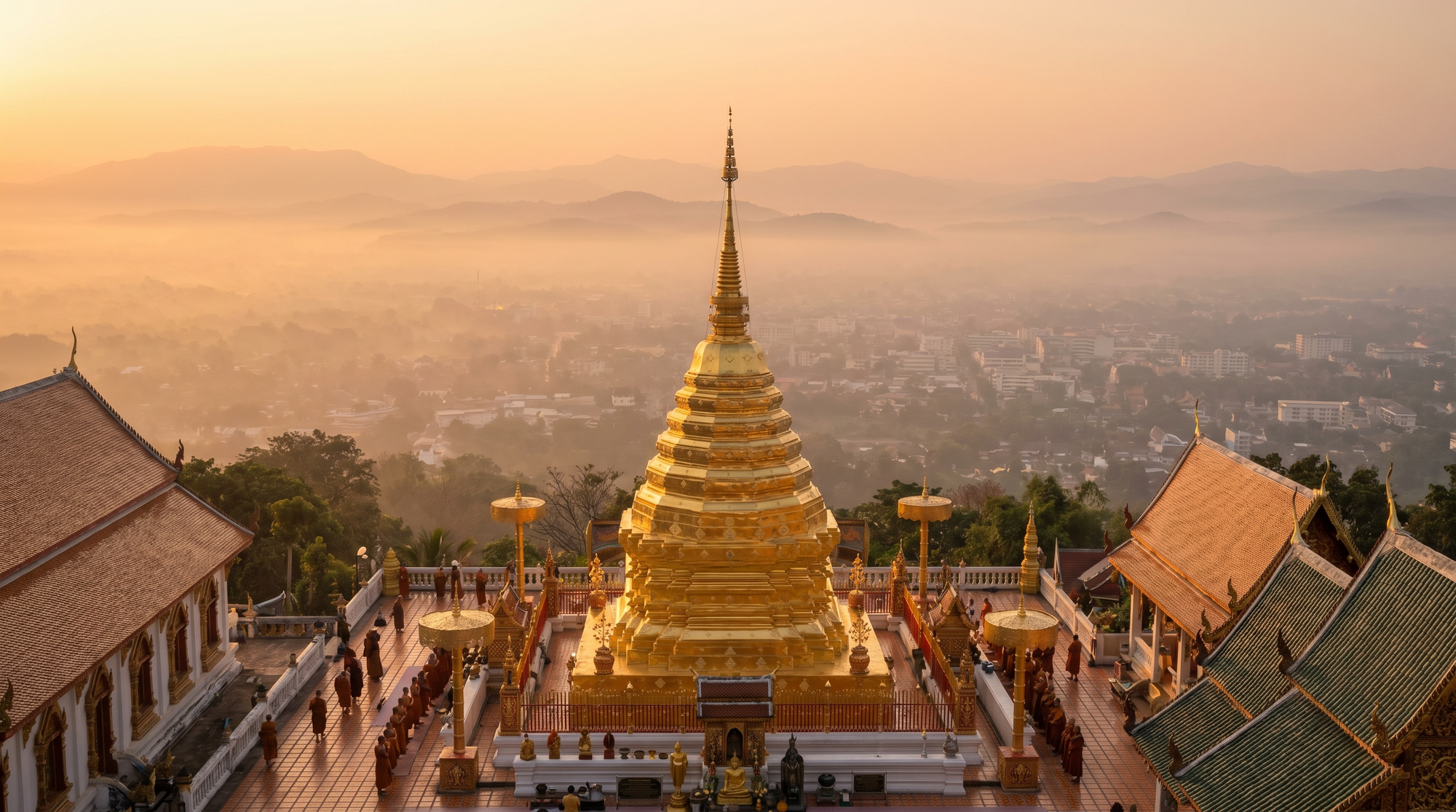
Wat Phra That Doi Suthep, on the mountain above the city, is where Chiang Mai comes to remember what it believes. Legend states that a relic of the Buddha was placed in a stupa there after a white elephant carried it to the mountains and died. Travel bix The hike up via the Monk's Trail, through forest past the hidden temple of Wat Pha Lat, is a substantially more meaningful arrival than the songthaew. The panoramic view of the city from the temple terrace at sunrise is one of the most memorable things available in northern Thailand.
What Monks Actually Do
Most visitors see monks in transit : walking to the market in the morning, sitting at the edge of a temple courtyard in the afternoon. The monastic schedule that structures those movements is worth knowing.
A monk's day begins at 4am with chanting, followed by the alms walk, breakfast, study, midday meal, afternoon chanting, and evening study. The schedule runs the same seven days a week, every week of the year. The temple functions as an active worship center with resident monks, daily ceremonies, and local Thai devotee traffic creating authentic atmosphere. Machu Picchu Gateway
Ordination as a monk is not a lifetime commitment in Thailand. Many Thai men ordain temporarily, sometimes for a few weeks, sometimes for a few months, as a way of making merit for their families and deepening their understanding of the teachings. You will often see young men in their twenties in saffron robes alongside older career monastics. Both are equally monks. The temporary nature of ordination for laypeople is one of the things that makes Thai Buddhism permeable in a way that some other Buddhist traditions are not.
The monk chat programmes at Wat Chedi Luang and Wat Suan Dok offer a structured way to ask questions directly. The conversations are genuine rather than scripted. Young monks who are studying English use the exchanges to practise the language while providing visitors with access to Buddhist philosophy that is otherwise difficult to find outside formal religious contexts.
The Rituals You Will See Every Day
Buddhism in Chiang Mai operates at the level of the small and the daily as much as the monumental and the ceremonial. You will encounter it constantly if you know what you are looking at.
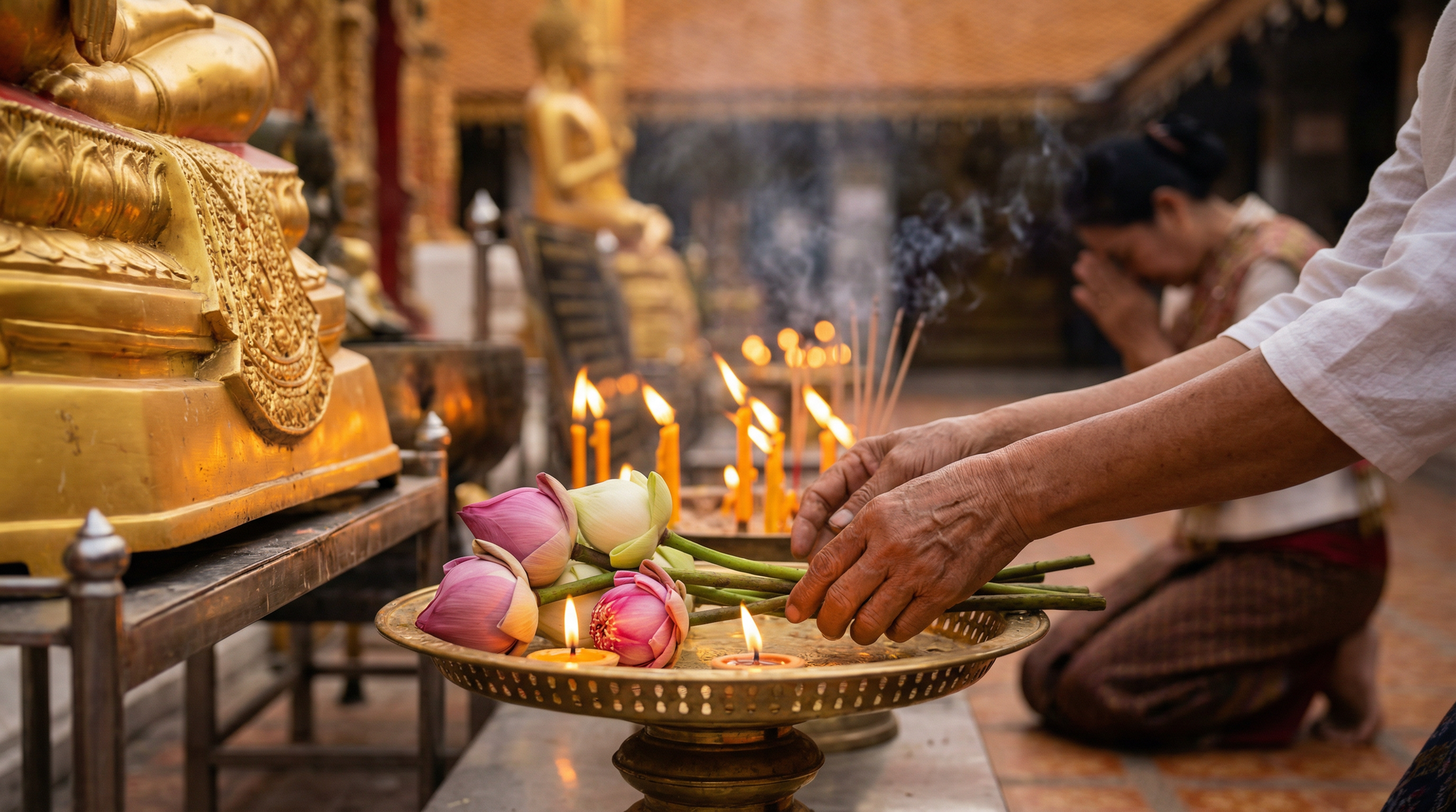
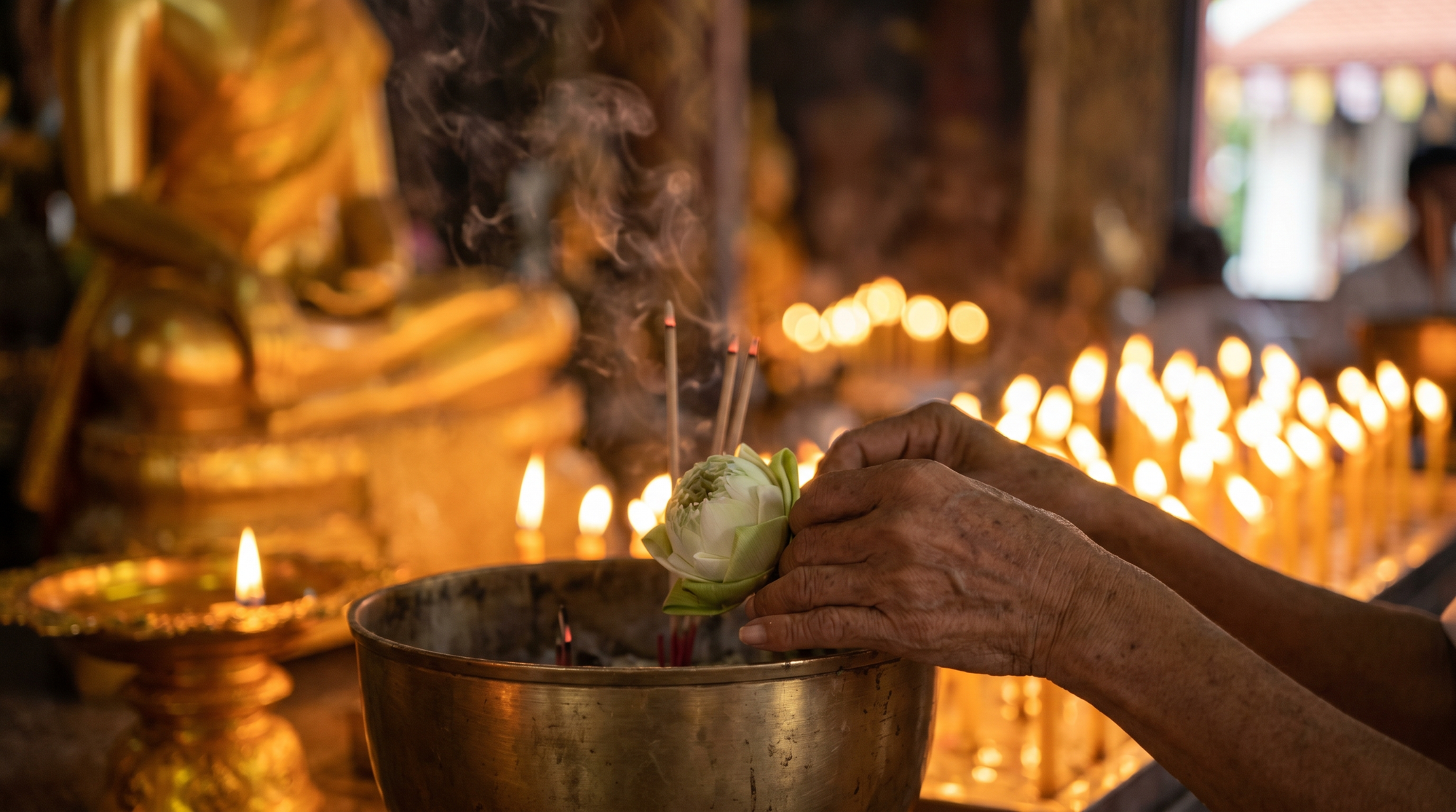
Merit-making rituals involve lotus flower offerings, incense burning, gold leaf application to Buddha images, and meditation prayer at cushioned stations surrounding chedi. Bells hanging from eaves create musical atmosphere when pilgrims ring them believing sound carries prayers to heavens. Machu Picchu Gateway
The spirit houses outside almost every building in the city, the small wooden structures on poles with offerings of water, flowers, and incense, are a parallel system that coexists with Buddhist practice. This is not contradiction. It is the northern Thai way of holding multiple spiritual frameworks simultaneously, each addressing a different relationship between people and the forces that shape their lives.
The temple walking tour with a former monk covers four temples in the old city and its surrounding neighbourhoods, including Wat Chiang Man, Wat Pa Pao, and Wat Lok Molee, with someone who spent years inside the monastic tradition. The difference between looking at a temple and understanding one is the difference between seeing and knowing.
How to Behave in a Temple
The rules are simple and worth following not because someone will enforce them but because the temples are genuinely in use.
Remove your shoes before entering any building within the temple grounds. Cover your shoulders and knees. Speak quietly. Do not photograph monks without permission. Do not point your feet toward a Buddha image or toward a monk when sitting. Women should not touch monks or hand objects directly to them.
None of this is difficult. All of it signals respect for a practice that predates the tourism industry by several centuries and will continue after it.
FAQ
How many temples does Chiang Mai have ? Over 300, with more than 30 active temples inside the old city walls alone. The density is the result of the city's role as the religious centre of the Lanna Kingdom and its continued importance as a hub for Buddhist study in northern Thailand.
What is the best time to visit temples in Chiang Mai ? Early morning, between 6am and 9am, when the light is softest, the temperature is coolest, and the tour groups have not yet arrived. The alms walk happens before 7am. Many temples are significantly quieter before 9am than at any other point in the day.
Can I attend a meditation session at a Chiang Mai temple ? Yes. Wat Suan Dok and Wat Chedi Luang both offer meditation sessions and monk chat programmes. Several temples in and around the city offer longer meditation retreats ranging from a single afternoon to multiple days.
What is the monk chat programme ? A structured opportunity to sit with resident monks and ask questions about Buddhism, monastic life, and Thai culture. Available at Wat Chedi Luang on most days and at Wat Suan Dok on specific evenings. The conversations are informal and genuinely informative.
Is it appropriate to visit temples as a non-Buddhist ? Yes. Thai Buddhist temples welcome respectful visitors of all backgrounds. The expectation is not belief but comportment : dress modestly, remove your shoes, speak quietly, and treat the space as the active religious site it is.